
Imagine you have spent weeks or months crafting a feature roadmap for your product. You’ve held planning sessions, prioritised ideas, and even scheduled development sprints. You feel confident that the next set of features you release will excite users and deliver business value.
But how confident are you, really?
More importantly, how much of that confidence is based on solid data versus intuition, opinion, or what feels right in the moment?
If your roadmap is built primarily on gut feelings rather than real insights into your users’ needs and behaviour, you are not alone. Small teams and startups often fall into this trap, thinking that they can guess their way to feature success. In practice, the results are often disappointing and costly.
This piece will show why relying on hunches is a high-risk strategy and why embedding data-driven insight into your feature prioritisation process is essential for sustainable growth.
The Flawed Tradition of Assumptions and Gut Feelings
Many small businesses and product teams start feature roadmap planning with internal brainstorming sessions. Stakeholders bring ideas to the table based on personal preferences, competitive pressure, or loud feedback from a small set of vocal users. It feels logical to build what you think your customers want.
But this approach has deep limitations.
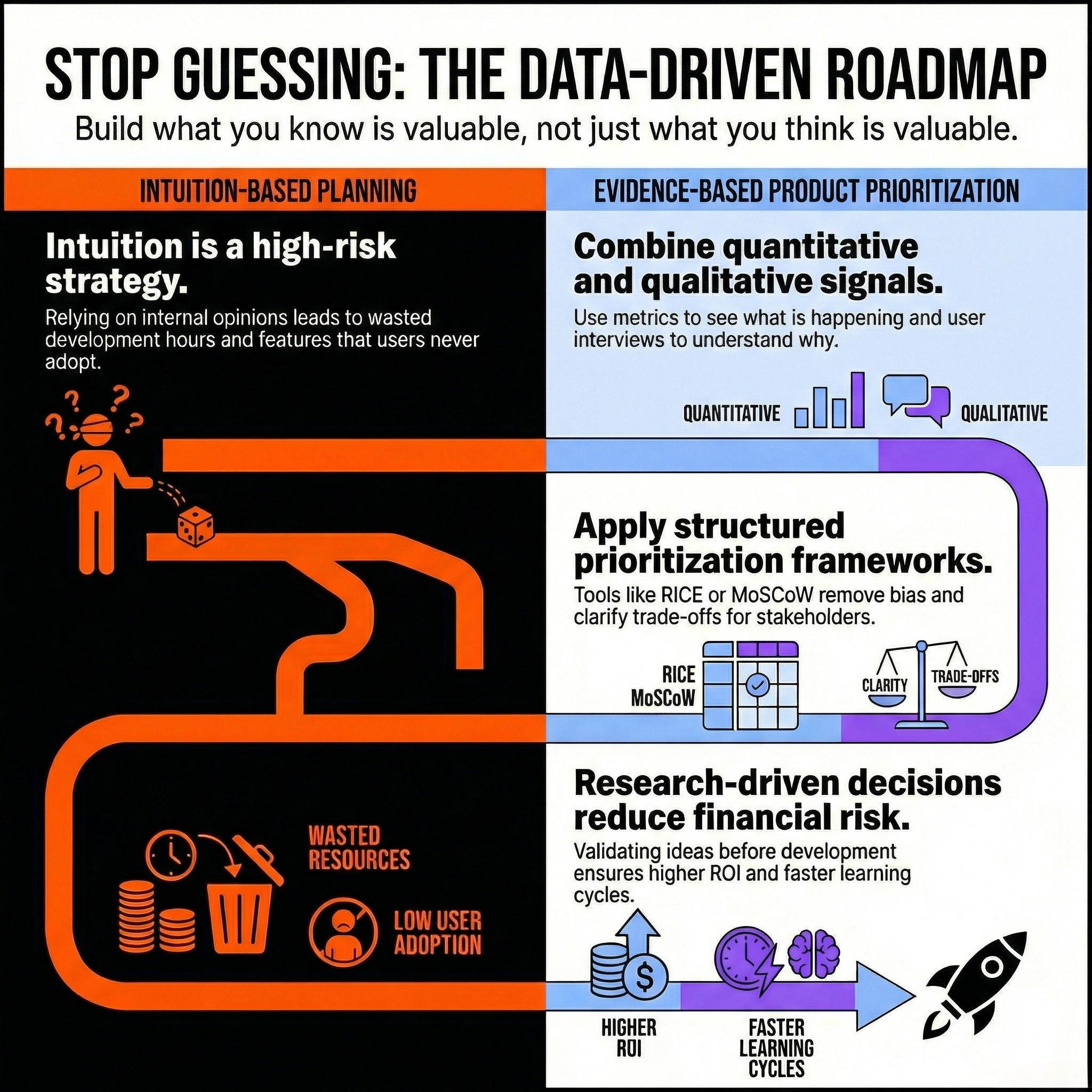
Feature prioritisation should be part of the core product management process, not an ad-hoc session of opinions. According to the Interaction Design Foundation, research-driven prioritisation ensures that the features you develop both meet user needs and align with business goals. When decisions are based on gut alone, you risk prioritising the wrong features first, or missing strategic opportunities entirely.
In a small team, these missteps are even more costly because resources are limited. Every sprint, developer hour, and dollar you invest in the wrong feature is time and money you cannot recover.
The High Costs of Misguided Prioritisation
When you prioritise without data, several negative outcomes become likely:
1. Wasted time and money.
Teams can spend weeks building features that few users adopt. This is time that could have been spent refining existing core experiences or validating a higher-impact idea.
2. Slow or low adoption.
Features built on internal assumptions rather than user understanding often fail to resonate with the audience. Low adoption means low impact and frustrated users. Effective prioritisation ensures your development sequence delivers the highest value items first, helping you get early wins and build momentum. (Atlassian)
3. Team misalignment.
Without clear, evidence-based prioritisation criteria, different stakeholders will pull the roadmap in different directions. This leads to internal conflict and a lack of clear focus.
4. Missed opportunities.
When teams don’t ground decisions in data, they miss trends and patterns that could unlock new growth vectors or deeper engagement.
The bottom line is simple. Prioritisation without data is not prioritisation at all. It is guesswork.
Why Data Matters: The Case for a Research-First Mindset
Effective product management requires understanding your users and making roadmap decisions that reflect real user needs and behaviours.
User research is not an optional enhancement. It is a critical foundation for product success. In user research, teams gather evidence about real people — what they struggle with, what they value, and how they interact with your product. This evidence makes your decisions more predictable and defensible.
As one leading product research guide explains, user research provides insights into behaviours and preferences that enable teams to make informed design and development decisions. This includes what to build, when to build it, and for whom.
Without this foundation, feature prioritisation becomes a guessing game. Worse, teams often rely on small, non-representative samples like informal surveys or “power users”. These voices can skew understanding and lead to roadmap decisions that do not reflect the broader base of real users.
What Data-Driven Prioritisation Looks Like
So what does a data-driven feature prioritisation process look like in practice?
1. Collect Qualitative and Quantitative Signals
Efficient teams draw from multiple sources of insight:
-
Quantitative signals such as usage metrics, retention rates, feature adoption, task completion time, and conversion funnels. These metrics show what is happening in your product.
-
Qualitative insights such as user interviews, structured feedback, support logs, or contextual inquiry. These help you understand why users behave a certain way.
Both are necessary. Numbers tell you something is happening. Conversations tell you why.
2. Build Rich Customer Profiles
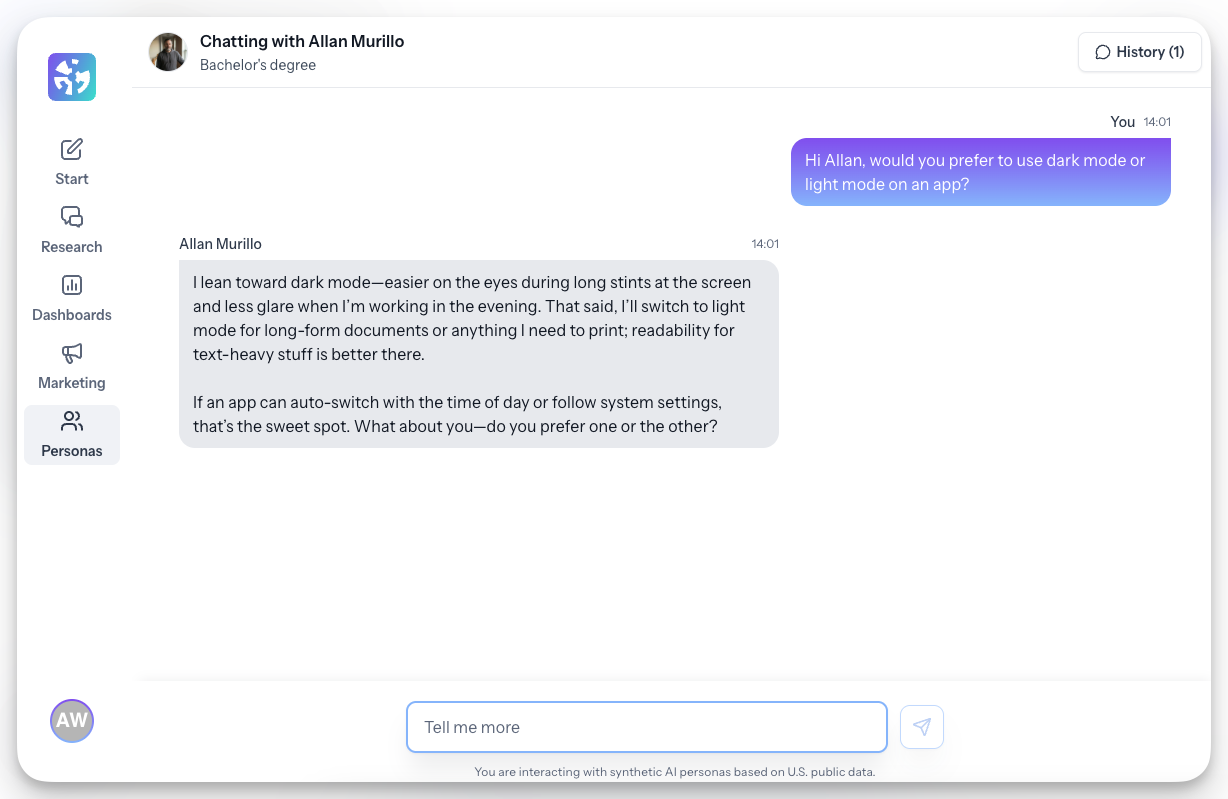
Creating personas or user profiles helps you move beyond abstract segments to clearly articulated user types with distinct goals and constraints. Personas shape prioritisation by highlighting which features will deliver value for specific user groups. According to design research in user experience, personas help teams prioritise features based on real user goals and contexts.
3. Use Structured Prioritisation Frameworks
Structured frameworks bring objectivity to your decisions. There are many models product managers use to formalise prioritisation, such as RICE, MoSCoW, or impact-effort scoring. These frameworks help teams evaluate features based on criteria like reach, impact, confidence, and effort.
Frameworks do not replace insight. They clarify trade-offs and make decision criteria explicit, which improves alignment and transparency.
4. Validate With Real User Feedback
Before you build, test your assumptions with feedback loops. This could include beta tests, usability tests, prototype validations, or early access programs. Data-driven teams treat roadmaps as hypotheses to be tested, not decrees to be executed.
5. Iterate and Adapt
The best roadmaps adjust based on evidence gathered post-release. Tracking user behaviour after launch allows you to measure real impact and refine your prioritisation for future cycles.
How Data-Driven Prioritisation Reduces Risk
Investing in evidence before development reduces risk in multiple ways:
Lower financial risk.
If you validate ideas early, you increase the likelihood that development investments return value. Research shows that blending data and human insight helps teams avoid wasted effort by aligning roadmaps with actual customer behaviour.
Faster learning cycles.
Data-driven processes let you test hypotheses quickly and decisively. Instead of months spent building something you think might work, you can gather relevant signals early and adjust your approach accordingly.
Better stakeholder alignment.
When your prioritisation decisions reference real data, it is easier to align executives, engineers, designers, and customer-facing teams around a shared roadmap. There is less debate about whose opinion matters most and greater confidence in decisions made.
Making It Practical for Small Teams
You do not need a large research budget or a dedicated analytics team to prioritise with data. Many practical approaches scale down to the resources available:
-
Start with a small set of qualitative interviews. Even five targeted conversations with existing or potential users will reveal patterns your internal team cannot see.
-
Leverage existing analytics tools. Tools like Cambium AI, Mixpanel, Amplitude, or open-source alternatives can give you basic usage and behaviour metrics.
-
Create simple dashboards. Identify key signals like active usage, churn rate, task completion, or drop-off points that matter for your product.
-
Document learning. Keep a shared repository of insights and decisions, so your team can see how data-informed roadmap choices.
The Takeaway: Strategy Rooted in Reality
The difference between a good product and a great product often comes down to this:
Good teams build what they think is valuable.
Great teams build what they know is valuable.
Grounding your feature roadmap in real data and research is not optional. It is the foundation for sustainable product success. A roadmap informed by real signals, structured prioritisation, and user validation helps you create features that matter to your business and, most importantly, to your customers.
For founders, small teams, and product managers who want to move beyond guesswork and build with clarity, tapping into rigorous, data-driven prioritisation is the path forward.
If you are ready to transform your prioritisation process with verifiable insights, explore how Cambium AI can support your strategy with data-anchored tools and frameworks.



.png)