Key takeaways
- Founders often skip customer research because scheduling, scripts and incentives make it slow and costly, so they guess, and guesses tend to be optimistic.
- Define the market with public data such as the Census and ACS, then ask personas built from that data about problems, alternatives, price and unclear messaging.
- Persona conversations filter ideas before human interviews rather than replace them. Their value is frequency: before a headline, before a price, after a weak campaign.
You know you’re supposed to “talk to customers.” Every good founder does. But between back-to-back meetings, product fires, and the pressure to ship, customer research often turns into a vague intention instead of a real practice. Weeks go by. Launch day arrives. You hope the market agrees with the story you told yourself.
Most founders do not skip research because they are lazy. They skip it because traditional research feels slow, awkward, and expensive. Scheduling interviews. Writing scripts. Incentivizing participants. Waiting weeks for answers you needed yesterday. So instead, many teams guess. And guessing is fast.
This post is about replacing that guesswork with something better. A way to pressure-test ideas, messaging, and pricing in minutes. A way to interview your Service Addressable Market without leaving your desk.
The Common Approach
When time is tight, founders default to familiar shortcuts.
They write copy that sounds right to them.
They model their pricing after a competitor’s landing page.
They ask friends for feedback, knowing full well those friends are not the buyer.
Sometimes they run a survey with leading questions. Sometimes they skim Reddit threads and call it research. Often, they do nothing at all and trust their instincts.
The underlying assumption is simple: deep customer insight requires deep effort. If you cannot do it “properly,” you might as well move fast and fix later.
This logic is understandable. It is also costly.
Why This Approach Fails in Practice
The biggest risk is not that you get a detail wrong. It is that you build confidence around a false narrative.
When you guess, you tend to guess optimistically. You assume your value proposition is obvious. You assume the pain is urgent. You assume the buyer thinks like you do.
Without real feedback, every decision reinforces the same internal echo chamber. Copy gets refined, not challenged. Features get added, not questioned. Pricing drifts toward what feels comfortable rather than what the market will tolerate.
The result is wasted time and quiet failure. Campaigns underperform with no clear reason why. Sales calls stall because objections appear “out of nowhere.” By the time you finally talk to customers, you are already emotionally invested in the wrong answers.
Traditional research does catch these problems. But it often arrives too late.
A Better Model
There is a more practical way to think about customer interviews. Stop treating them as a formal project and start treating them as a daily input.
Instead of asking, “Can we schedule interviews this month?” ask, “Can we test this assumption right now?”
A modern focus group does not require a conference room or a moderator. It requires two things:
-
A statistically grounded understanding of who your Service Addressable Market actually is.
-
A fast way to have realistic conversations with that market on demand.
When you combine those two elements, customer research shrinks from weeks to minutes.
Step 1: Define the Market with Real Data
Most personas fail because they are built from imagination. Age ranges are guessed. Income is inferred. Job titles are aspirational.
A better approach starts with public, verifiable data. Sources like the United States Census Bureau and the American Community Survey describe how real populations live, work, and spend. When you anchor your market definition in this data, you remove bias before the conversation even begins.
This does not make your research rigid. It makes it honest. You stop interviewing the customer you want and start engaging the customer who exists.
Step 2: Turn Data into a Conversational Interface
Quantitative data tells you who the market is. It does not tell you how they think.
This is where most teams stall. They know the demographics, but cannot access the psychology quickly enough. The solution is to simulate conversation at scale.
Instead of waiting for interviews, you interact with statistically accurate personas built from public data. You ask them the same questions you would ask a real prospect:
-
What problem would make you look for this service?
-
What alternatives would you consider first?
-
What would make this feel too expensive?
-
What part of this message sounds unclear or exaggerated?
Because these personas reflect real-world distributions, their answers reveal patterns, not anecdotes. You see objections repeat. You see language converge. You see which benefits resonate and which fall flat.
This is not a replacement for human interviews. It is a filter. It helps you walk into real conversations informed instead of hopeful.
Step 3: Use It as a Daily Decision Tool
The power of a 5-minute focus group is not depth. It is frequency.
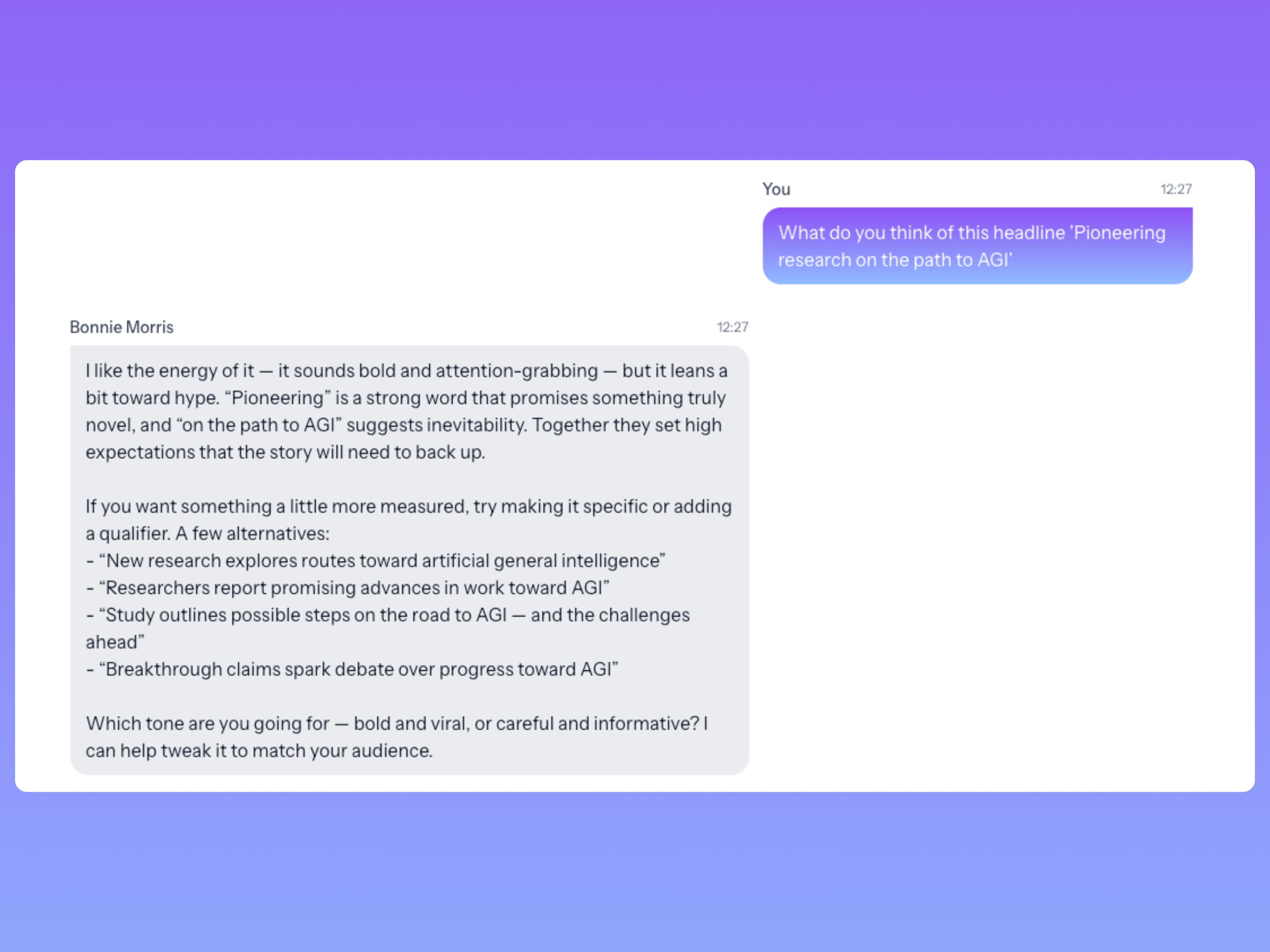
You can run one before writing a landing page headline.
You can run one before setting a pricing tier.
You can run one after a campaign underperforms.
Because the cost is low, you ask better questions more often. Over time, this compounds into a sharper intuition grounded in evidence rather than instinct.
Teams that work this way stop debating opinions internally. They externalize uncertainty and let the market speak first.
Why Speed Changes Everything
Fast feedback changes how you build.
When research is slow, it becomes precious. You try to ask perfect questions. You delay decisions until the study is done. Momentum suffers.
When research is fast, it becomes casual. You test ideas early and discard them easily. You stop defending assumptions because replacing them is cheap.
This is how experienced founders seem to “just know” what will work. They are not guessing better. They are validating faster.
The Real Shift: From Interviews to Infrastructure
The biggest mindset change is realizing that customer insight should be infrastructure, not an event.
You do not “do research” once. You embed it into how decisions get made. Data defines the market. Conversation tests the story. Both are available on demand.
This is what finally closes the gap between strategy and reality for small teams. You get the benefits of enterprise-grade research without the overhead that usually makes it impossible.
The Takeaway
If you are waiting for the perfect moment to talk to customers, you will always be waiting. The better move is to lower the cost of listening until it becomes automatic.
A 5-minute focus group will not answer every question. But it will prevent you from building confidently in the wrong direction. And in early-stage work, that is often the difference between traction and noise.
If you want to see how this kind of data-grounded, conversational research can fit into your workflow, explore tools like Cambium AI that are built around this.
If you would like a demo of the product, please click here.


.png)