
A housing policy, a transportation investment, or a new development shapes an area for decades. It affects where people can live, which jobs and schools they can reach, and how their community changes. The planners who do that work deserve evidence they can trust, and they should not have to spend weeks putting it together.
This year at Cambium AI, we spoke with planners across the US about how they build the evidence for their plans, studies, and grant applications. Many told us the information exists, but getting it together takes time.
“It’s not a cost issue. It’s just a time issue.” Wendy Moeller FAICP, planning consultant
“I need all of that information on one map and I can never get it on one map.” Tara Paxton FAICP, land use and resiliency planner
EIKOS is what we built in response. Today we’re releasing it.
The Boston and Worcester examples in EIKOS.
What EIKOS shows
EIKOS shows planners how residents are likely to spend an ordinary day in the area they plan for. Each dot on the map is a simulated resident with a home and a daily schedule, and a job and a commute where they have one. Press play and the day runs hour by hour, on a weekday, a Saturday, or a Sunday.
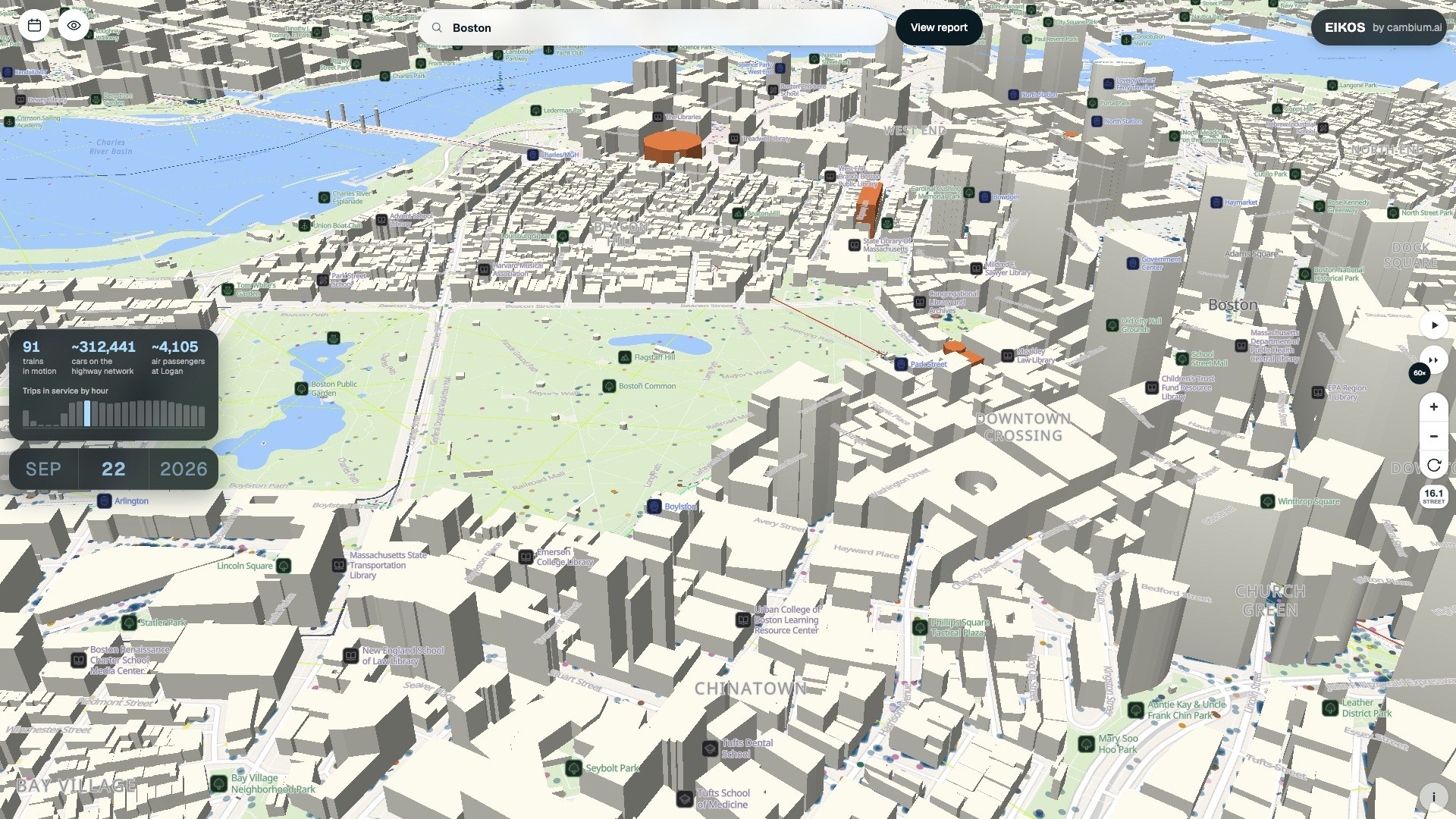
The Boston example in EIKOS.
Click a resident to see who they are: their age, education, job, income, household size, and what they are doing at that moment. Every resident is synthetic, modeled statistically from census and national survey data. The simulation contains no personal data.
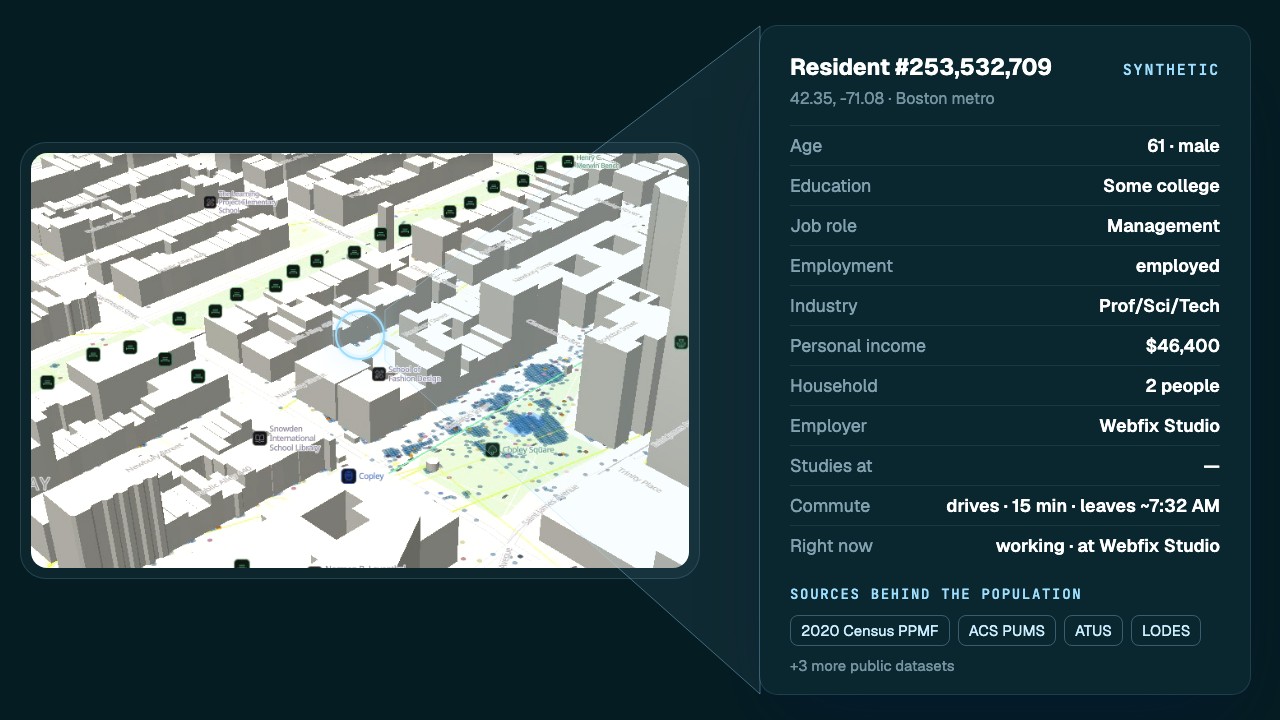
The Boston example in EIKOS.
Why simulated residents help
Public data usually comes as separate tables. One gives you age, another income, another how people travel to work. Each is useful, but none of them tells you how those facts combine for the same household.
Each resident in EIKOS carries all of them at once, in the same combinations they appear in the real population. So you can see how age, income, work, and travel fit together for the people who live in an area.
The Report
Next to the simulation, EIKOS has a planning Report with two tabs: Comprehensive planning and Urban design and planning. Its sections cover topics a plan has to address, such as population, housing, and employment. Every section names its sources, and the Report cites the state planning law that applies.
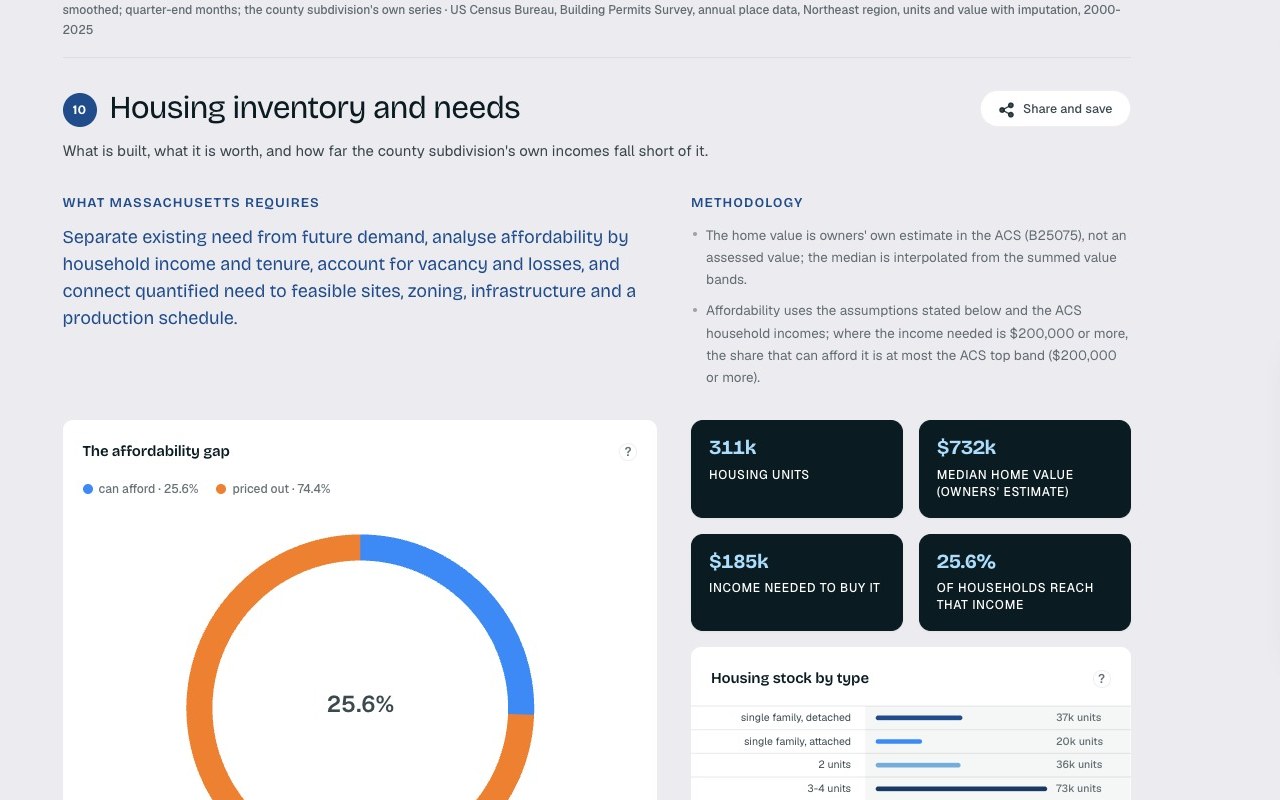
The Boston example in EIKOS.
EIKOS does the analysis. The judgment stays with you.
Built with planners
The planners we spoke with described the pressures of their work to us, and those conversations shaped what went into EIKOS. We’re grateful to Todd Ashby FAICP, Panini Chowdhury AICP, John Guszkowski FAICP, Chris Kluchman FAICP, Wendy Moeller FAICP, Luis Nieves Ruiz FAICP, Tara Paxton FAICP, and the other planners across the US who have helped shape EIKOS.
To show what EIKOS can do, we built a full example for Boston. It pairs a city simulation with ten planning analyses covering population, housing, employment, environmental constraints, and access to services. Book a demo and we’ll take you through it.
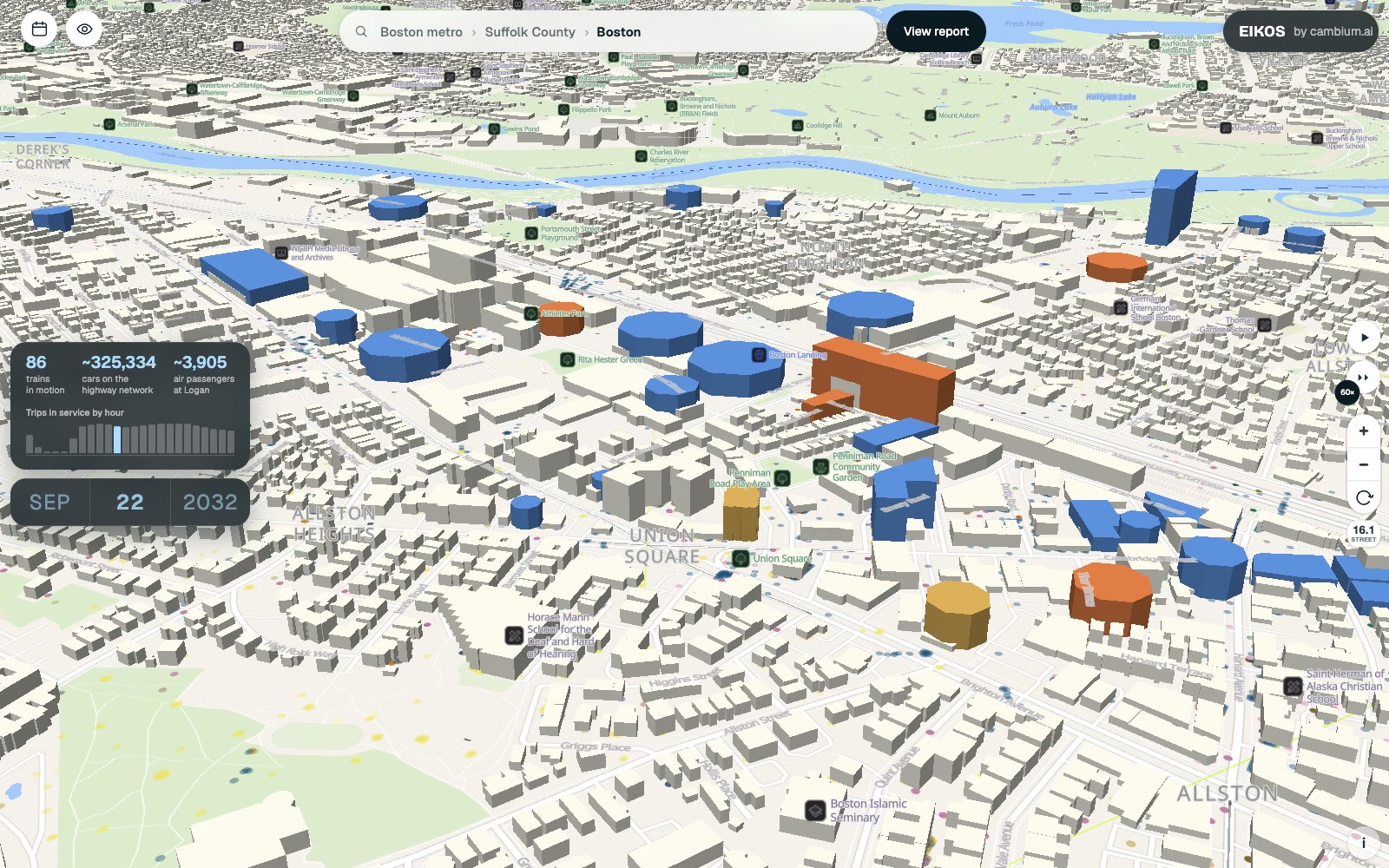
The Boston example in EIKOS.
What comes next
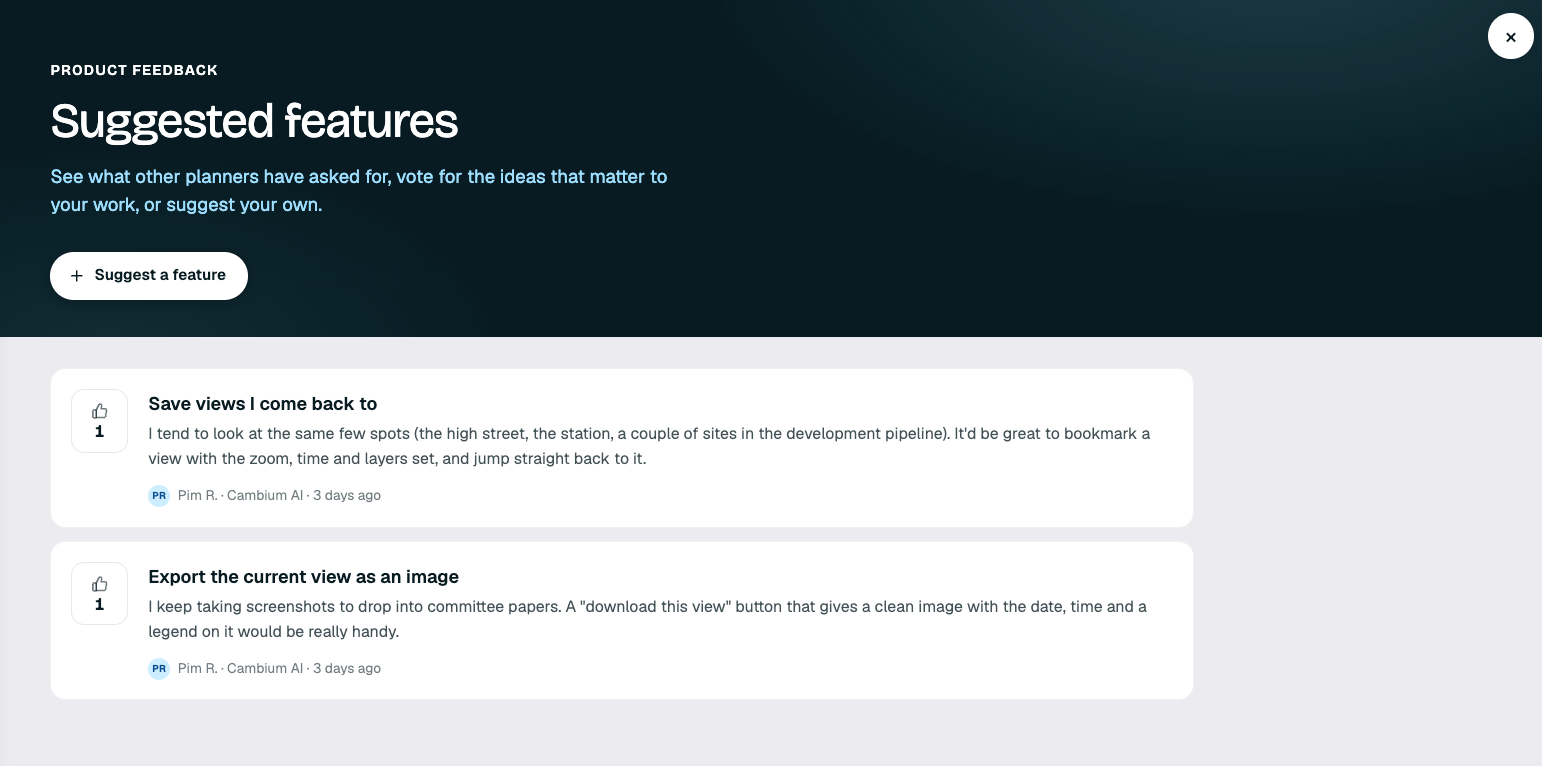
Once you’re in, you can suggest features and vote on what other users have asked for. We update EIKOS often, based on what users suggest.
Planning for the people who will live with it
Planning is a commitment to the people who will live with its decisions. The purpose of EIKOS is to help you understand the lives your decisions will shape, and bring that understanding into planning for the future.
If you’d like to see how EIKOS would work for your area, book a demo.

.png)

.png)