Understanding people you do not already have access to is one of the biggest challenges in business, research, and policymaking. You may have access to your customers or users. But what about potential customers, communities you want to serve, or people whose behaviour and preferences you need to understand before you invest time or money? Public data is one of the most powerful resources for answering these questions. It can reveal patterns, traits, and context that you simply cannot observe from your own records alone.
This article explains what public data is, why it matters, how it can be used to understand people you cannot talk to directly, and how the right tools can make that process easier and more effective.
What is public data?
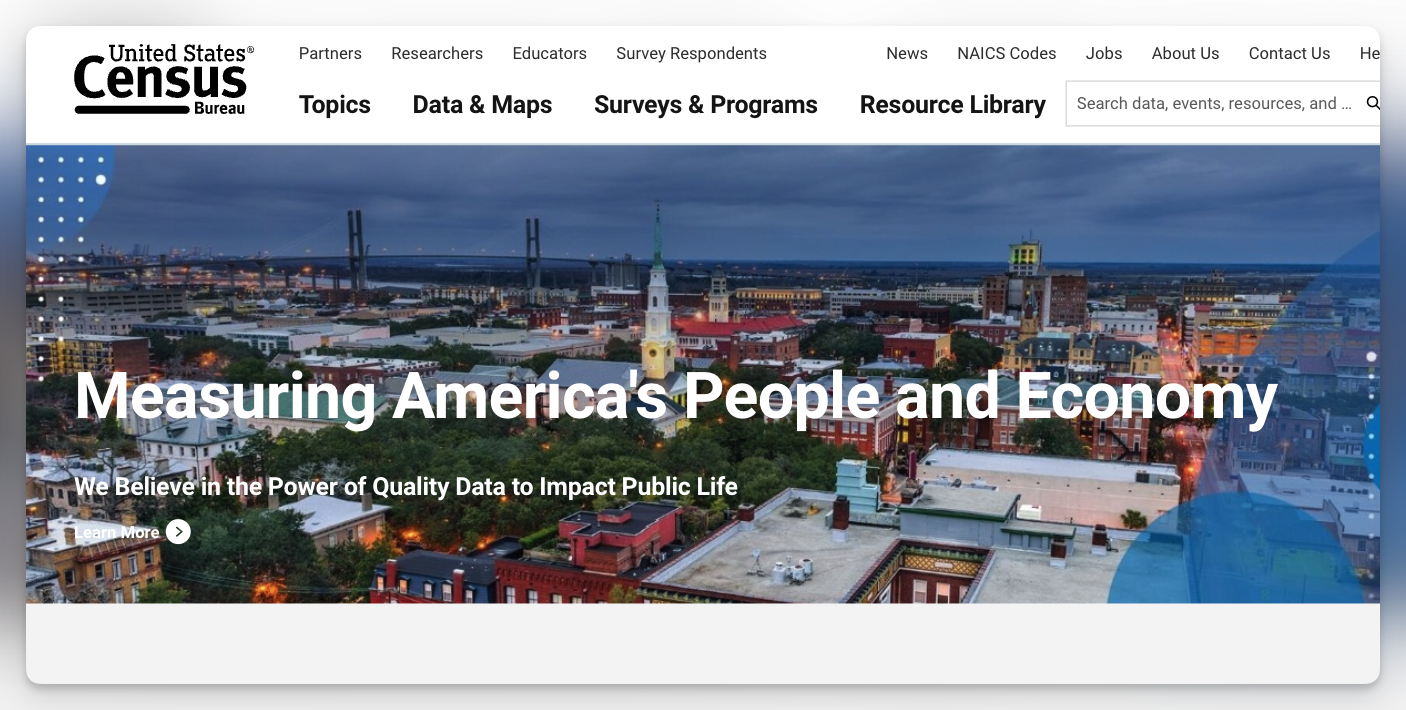
Public data refers to information that is openly available to anyone. It includes official statistics collected by governments, academic research datasets, open data published by organisations, and aggregated or anonymised information that does not identify specific individuals. Census data, health statistics, economic indicators, education records, employment figures, and demographic profiles are all examples of public data. Governments and statistical agencies publish this data to support transparency, research, and informed decision-making.
Public data is distinct from private data in that it is intended for widespread use. There are legal and ethical safeguards built into how this data is released so that individual privacy is protected. You do not need permission or a special licence to access public data, although some detailed or restricted datasets may require agreements or credentials.
The gap between what you know and what you need to know
Most organisations understand their own customers or users through first-party data. This includes transaction histories, email lists, and behavioural metrics from websites or apps. First-party data is valuable in its own right, but it leaves gaps:
- You cannot see the people who did not interact with you.
- You cannot easily compare your audience to broader demographics.
- You cannot understand trends outside your sphere of visibility.
Without external data sources, you are trying to infer a larger population’s behaviours from a narrow slice of interactions. This often leads to blind spots in strategy, underperformance in outreach, and missed market opportunities. You could survey new audiences directly, but surveys are expensive, slow, and difficult to scale.
Public data fills this gap by offering a broader, objective frame of reference.
Why public data matters for understanding people
Public data gives you access to information about large populations at scale. By analysing this data, you can draw conclusions about groups you do not have direct access to. Here are the main ways it helps:
1. It provides demographic and socio-economic context
Public data sources include detailed demographic profiles, including age, gender, education level, employment status, household composition, and income brackets. These data allow you to understand the structure of a population beyond your current customer base. For example, Census data can tell you which age groups are growing fastest in a region or which communities have higher household incomes. Those insights help you tailor your product development, messaging, and service delivery to groups you have not yet engaged with.
2. It reveals behavioural patterns at population scale
Many public datasets track behaviour over time. Public health statistics, transport usage data, and labour market trends show how populations respond to economic shifts, policy changes, or social factors. Analysing these patterns helps you anticipate how larger forces might affect segments of the population. For example, understanding employment trends can help you forecast consumer spending behaviour in different regions.
3. It supports segmentation beyond your own customers
Segmentation is the process of dividing a population into meaningful subgroups. Public data gives you baseline profiles that you can use to create segments that extend beyond your existing audience. This helps you find “lookalike” groups that share traits with your customers but are not yet engaged. Creating these segments based on rich, external data leads to more accurate audience targeting in marketing or policy outreach.
4. It enables hypothesis testing without direct contact
Public data allows you to generate and test hypotheses about behaviour without running expensive field studies. You can analyse trends, correlations, and distributions in the data to form evidence-based assumptions. For example, if a dataset shows that a particular region has high rates of a specific interest or issue, you can test whether your product or service may resonate there before investing in local campaigns.
How public data is commonly used
Public data is widely used across sectors. Here are some clear cases where it adds value:
Market research and segmentation
Public data is used to build customer personas or segments that describe audience groups based on real characteristics. Personas inform product development, messaging, and channel strategy. Businesses combine public demographic data with their own insights to paint a more complete picture of prospective users.
Public policy and social planning
Governments use public data to identify needs in education, healthcare, and economic development. Because the data represents entire populations, policymakers can allocate resources where they are most needed. Transparent public data supports accountability and resource planning.
Investment and economic forecasting
Financial analysts and investors use public economic indicators to anticipate market movements and assess risks. These datasets can reveal macro trends that drive investment decisions.
Community and non-profit initiatives
Charitable organisations use public demographic and social datasets to prioritise areas for intervention. For example, identifying regions with high unemployment supports targeted support initiatives.
Examples of public data sources
There are many public data repositories and catalogues. A few commonly used sources include:
- National Census databases
- Government open data portals (for local, regional or national data)
- Education and labour statistics
- Health and epidemiological data
- Transport and environmental data
Some public data portals provide structured APIs that allow automated analysis and integration with analytics tools.
What public data cannot do on its own
Public data is powerful, but it is not a silver bullet. It does not replace direct engagement with people. Its limitations include:
- It is often aggregated, not individual-level data.
- It may lack the context that comes from direct conversations.
- It can be outdated if not updated regularly.
To get the most meaningful insights, public data needs to be combined with other sources, such as first-party data, qualitative research, and contextual understanding from domain experts.
The role of technology in scaling public data insights
Public data is abundant, but abundance alone does not create understanding. Census tables, labour statistics, health surveys, and economic indicators are often fragmented across sources, released in different formats, and structured for statisticians rather than practitioners. Without the right technology, extracting insight from this data requires specialised skills, significant time, and a tolerance for complexity that most teams do not have.
Modern research platforms change this dynamic by removing friction from the process. Instead of manually sourcing datasets, cleaning files, and stitching together analyses, these systems automate access to public data and translate it into structured, usable inputs. They make it possible to ask practical questions in plain language and receive answers grounded in real population data.
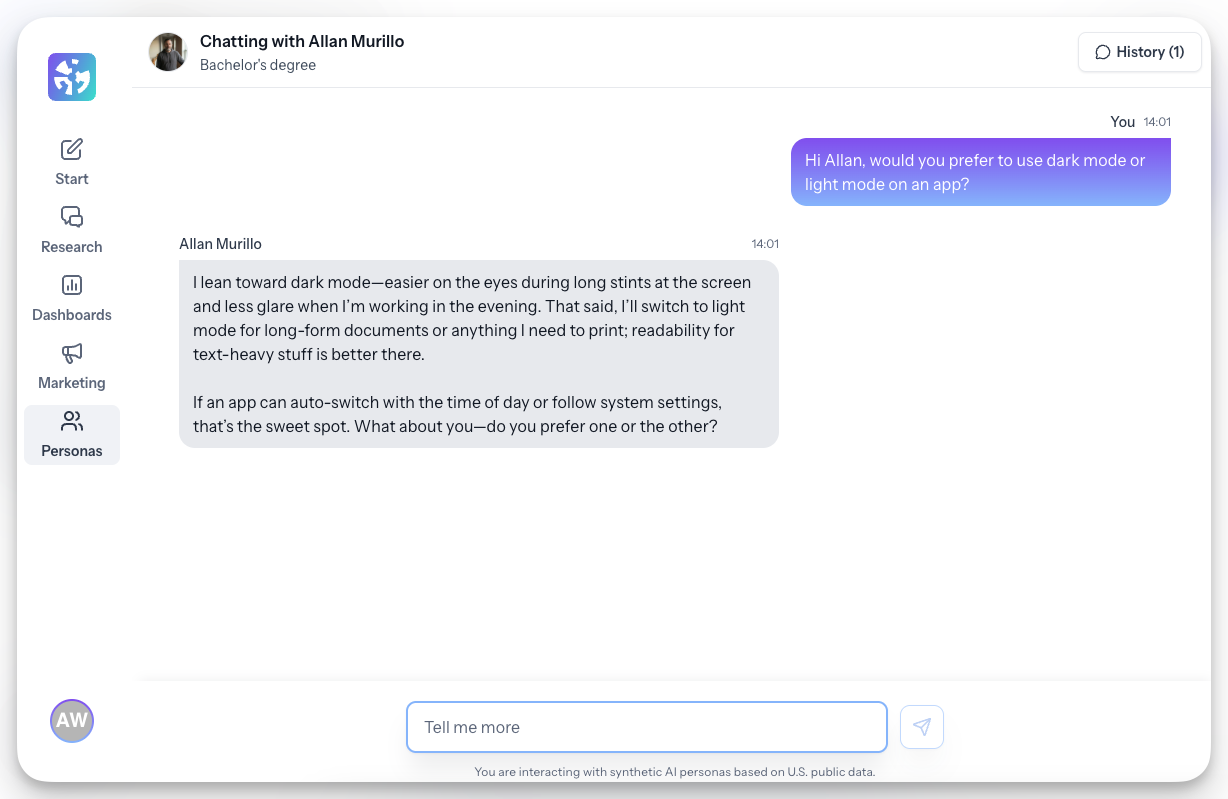
This is where tools like Cambium AI operate. We connect directly to verified public data sources and apply them to real business and research problems. Rather than treating public data as a static reference, it turns it into an active input for decision-making. Users can explore demographics, behaviours, and economic conditions without needing to understand the underlying statistical machinery.
.png?width=3200&height=2400&name=In%20Post%20Blog%20Images%20(60).png)
Crucially, we do not stop at summarising data. We use public data as the foundation for building statistically accurate synthetic personas. These personas reflect real population distributions, not generic assumptions. Users can then interact with them to test ideas, messaging, pricing, or positioning. This bridges the gap between quantitative population data and qualitative insight, which is where most teams struggle.
What this means for your work
When public data is integrated directly into your research and planning workflow, your decisions change. You no longer rely on intuition or narrow samples to define your audience. Instead, you start with a clear, evidence-based understanding of who exists in the market, how they differ from one another, and which groups are most relevant to your goals.
This means you can evaluate opportunities before committing resources. You can identify underserved segments, understand regional differences, and assess whether your assumptions about demand align with reality. For marketers, it means messaging and positioning are informed by actual demographic and behavioural context rather than inferred personas.
Combining public data with interactive research tools allows you to move from exploration to validation in hours rather than weeks. You can generate audience profiles, pressure-test ideas through simulated conversations, and refine your strategy without waiting for surveys or interviews that may never happen.
Public data also strengthens accountability. Because the insights are grounded in transparent, well-documented sources, your conclusions are defensible. You can explain not just what you believe, but why you believe it, and what data supports that view.
Q1: What is public data and how can businesses use it to understand new markets?
Public data refers to government-published datasets — including census records, labour statistics, health surveys, and economic indicators — that are freely accessible to anyone. Businesses can use these sources to build demographic profiles of markets they've never entered, identify underserved segments, and make evidence-based decisions before committing budget to expansion or campaigns.
Q2: Why is first-party data alone not enough to understand your full audience?
First-party data only captures people who have already interacted with your business. Everyone who hasn't purchased, signed up, or engaged is completely invisible in your CRM. This creates a structural blind spot — you're building strategy around a narrow slice of the market while the broader, unreached population remains unknown and unaddressed.
Q3: How can you use public data to find new audience segments you've never reached?
Start by identifying population groups in public datasets — such as census or employment data — that share demographic or socio-economic traits with your existing customers. These "lookalike segments" exist outside your first-party data but are statistically identifiable. This lets you prioritise outreach to high-potential groups before investing in campaigns or primary research.
Q4: What are the best free public data sources for market research?
The most reliable sources include national census databases, government open data portals, labour and employment statistics bureaus, public health surveys, and economic indicator repositories. Examples include the UK Office for National Statistics, the US Census Bureau, and Eurostat. Most publish data via downloadable files and increasingly through APIs for automated access.
Q5: How does leveraging public data compare to running surveys for audience research?
Surveys are expensive, slow to design and field, and difficult to scale — particularly for new or hard-to-reach audiences. Public data is free, already collected at population scale, and immediately accessible. While surveys capture stated preferences and attitudes, public data provides verified demographic and behavioural context that surveys cannot cost-effectively replicate across large populations.
Q6: When should an organisation use public data instead of primary research?
Use public data as your first step whenever you're exploring an unfamiliar market, testing a regional hypothesis, or need directional insight quickly. It's particularly valuable before committing budget to surveys or focus groups. Once public data has shaped your hypotheses and narrowed your questions, primary research becomes faster, cheaper, and more targeted as a follow-up layer.
Q7: What are the main limitations of using public data for audience analysis?
Public data is typically aggregated rather than individual-level, which limits precision. It can also be outdated depending on release cycles — census data, for example, may be several years old. It lacks the conversational nuance of qualitative research. These limitations are best managed by combining public data with first-party data, domain expertise, and targeted qualitative input.
Q8: How do synthetic personas built from public data differ from traditional marketing personas?
Traditional personas are built from existing customer interviews and CRM data, which structurally excludes non-customers. Synthetic personas grounded in public population data reflect real demographic distributions across an entire market — including people who've never engaged with your brand. This makes them more statistically representative and useful for evaluating untapped audience opportunities.
Q9: Can small businesses or non-profits benefit from leveraging public data for audience insights?
Absolutely. Public data is free, which makes it particularly valuable for organisations with limited research budgets. Non-profits can use demographic and unemployment data to identify communities with the greatest need. Small businesses can use regional population trends to assess local market opportunities — without commissioning expensive research that would otherwise be out of reach.
Q10: How do you turn raw public data into actionable audience insights?
Raw public data — often released as fragmented files in formats built for statisticians — requires aggregation, cleaning, and contextual interpretation before it becomes useful. The most effective approach combines automated data pipelines to handle collection and formatting, analytical frameworks to identify patterns, and interactive tools that translate population statistics into testable audience profiles and decision-relevant conclusions.
Understanding people you do not already have access to requires more than educated guesses or small samples. It requires a foundation built on real population data and a way to turn that data into insight you can act on. Public data provides the scale and credibility needed to see beyond your immediate audience, but only if it is accessible and usable.
By combining verified public data with tools that support exploration, segmentation, and qualitative validation, you can build a clearer picture of markets and communities you have not yet reached. If you want a practical way to do this without building a research team from scratch, start a free trial with Cambium AI here.

.png)